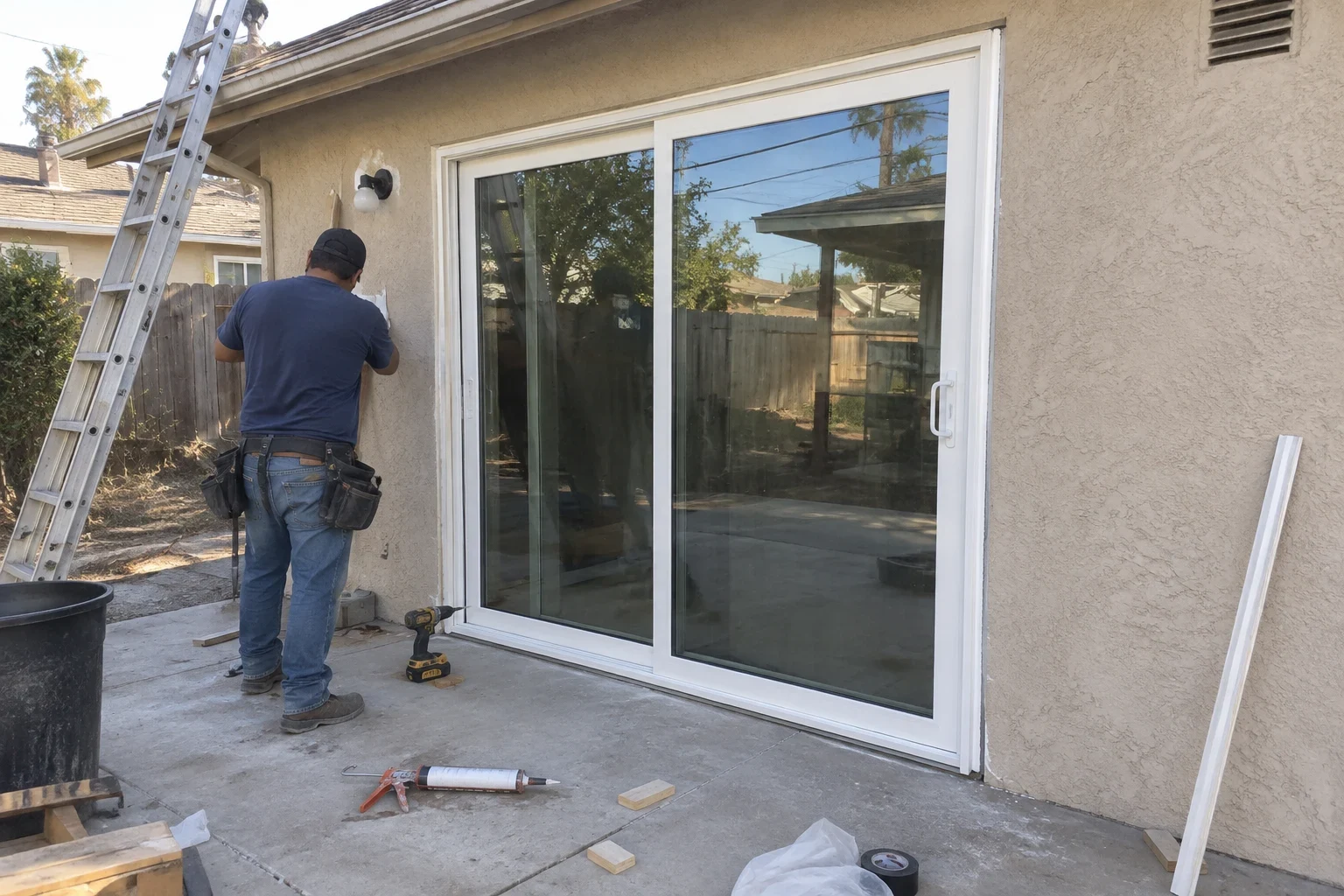
Are French Doors More Energy Efficient Than Sliders in Norwalk?
The door style matters less than most people expect; the glass, the seals and the installation do most of the work.
Are French doors more energy efficient than sliders?
Not automatically. A well-built French door often leaks a little less air than a slider because its panels press shut against compression seals. A slider usually has more glass and less frame. In a mild Southern California climate, the glass package and a careful installation decide most of the real difference.
Where does a glass door actually lose energy?
Any large glass door gives up energy in four places: air leaking around the moving parts, heat passing through the glass, heat passing through the frame, and gaps left between the frame and the wall opening. The style of the door only changes the first one in a meaningful way.
The glass is the biggest surface by far, so it carries most of the load. A door with dual-pane, low-E glass and a sound frame will outperform an older single-pane door of either style, every time.
- Air leakage at the seals and where the panels meet
- Heat moving through the glass, measured as U-factor
- Sun heat coming through the glass, measured as solar heat gain coefficient (SHGC)
- Gaps around the frame from a rushed or poorly sealed installation
Why do French doors tend to seal tighter?
A French door swings closed and squeezes against its weatherstripping, much like a refrigerator door. That compression seal blocks drafts well when the door is new and properly adjusted. A slider's panel has to glide past its seals, so it relies on brush-style weatherstripping that touches the panel without gripping it.
The advantage is real but narrower than it sounds. A pair of French doors has a seam down the middle where the two panels meet, and that joint depends on a strip called an astragal staying tight. Hinges can sag over the years, and once a panel drops even slightly the seal stops pressing evenly. A slider that has been kept clean and adjusted holds its seal longer than many people assume.
Can a modern slider match a French door on efficiency?
In most homes, yes. Current vinyl sliders use interlocking meeting rails, where the two panels hook into each other when closed, plus multiple layers of weatherstripping and adjustable rollers that keep the panel level in its track. Pair that with dual-pane low-E glass and the gap between the two styles becomes very small.
Sliders also bring a practical efficiency gain: more glass and less frame for the same opening. That means more daylight, which can cut down on lights during the day. The trade-off is that more glass also lets in more sun, which is why the coating on that glass matters so much.
Every rated door carries a label from the National Fenestration Rating Council. When you compare doors, compare these numbers rather than the style.
- U-factor: lower means less heat passes through
- SHGC: lower means less sun heat gets inside
- Air leakage: lower means fewer drafts
- Visible transmittance: higher means more daylight
What matters most for a door in a Norwalk home?
Here the long, warm summers do more damage to comfort than the short, mild winters. A west- or south-facing glass door can turn a family room into the hottest space in the house by late afternoon. For that reason, a low SHGC usually saves more on cooling than a slightly better air seal ever will.
California's energy code sets limits on U-factor and solar heat gain for replacement glass doors, and replacing one generally calls for a permit. A door that meets those limits and is installed square, level and sealed to the wall will feel noticeably cooler than the original single-pane slider found in many older homes.
How we help you choose and plan the work
Our door work centers on sliding door replacement and multi-folding doors, along with the window replacement and energy efficient windows that often go in at the same time. At a free in-home estimate, we look at which way the opening faces, how the current frame sits in the wall and how your family uses the space. Then we show you the ratings on the doors that fit, with no sales pressure or obligation.
Doors are made to size, so we give you a realistic timeline for delivery before you commit, not an optimistic guess. On install day you get an arrival window you can plan around, and if a shipment or a permit step shifts the schedule, we call you as soon as we know. Most homeowners care as much about that as about the door itself.
More questions about glass doors and energy
Something not covered here? (562) 647-1415
Do multi-folding doors lose more energy than sliders?
They have more panel joints, so more places where seals have to meet. Good multi-folding doors use compression seals at each joint and the same low-E glass options, so the gap is smaller than the number of panels suggests. Orientation and glass choice still matter most.
Is argon gas between the panes worth it here?
Argon slows heat moving through the glass a bit more than air does. In a mild climate the gain is modest, but it adds to the low-E coating and is commonly included in dual-pane units.
How long does a sliding door replacement take on site?
Most installations are finished in a single day once the door has arrived. We confirm the timing and the arrival window ahead of time, and we clean up the work area before we leave.
Will a new slider make the room quieter too?
Usually, yes. Dual-pane glass and tighter seals cut street and yard noise along with drafts, especially when replacing an older single-pane door.
Compare the doors on real numbers
Call for a free in-home estimate. We measure your opening, show you the efficiency ratings that fit your home and give you a delivery and install timeline you can count on.